
The first sola, Sola Scriptura (“Scripture Alone”), teaches that the Bible is the highest authority for Christian faith and practice. Many Christians consider this principle important today because it encourages believers to base their beliefs on Scripture rather than solely on human traditions, church leaders, or cultural trends. In a world where many competing ideas exist, Sola Scriptura provides a consistent foundation for determining truth.
The second sola, Sola Fide (“Faith Alone”), states that people are justified before God through faith in Jesus Christ rather than through their own good works. This doctrine remains significant because it emphasizes that salvation is a gift that cannot be earned. For many believers, Sola Fide offers assurance and hope, reminding them that their relationship with God depends on trusting Christ rather than achieving moral perfection.
The third sola, Sola Gratia (“Grace Alone”), teaches that salvation comes entirely through God’s grace. This doctrine highlights God’s love and mercy toward humanity. Many Christians find this teaching relevant today because it encourages humility and gratitude. It reminds believers that salvation is not something they deserve but a gift freely given by God.
The fourth sola, Solus Christus (“Christ Alone”), affirms that Jesus Christ is the only mediator between God and humanity. This principle remains central to Protestant Christianity because it focuses attention on the person and work of Christ as the foundation of salvation. In modern society, where many people seek spiritual meaning in different places, Solus Christus emphasizes the unique role of Jesus in the Christian faith.
The fifth sola, Soli Deo Gloria (“To the Glory of God Alone”), teaches that all aspects of life should ultimately bring glory to God. This principle encourages Christians to view their work, relationships, worship, and daily actions as opportunities to honor God. Today, many believers see this doctrine as a reminder to live with purpose and to place God above personal ambition or recognition.
However, some Christians argue that the Five Solas are not equally important for all denominations. Certain traditions, particularly the Roman Catholic and Eastern Orthodox Churches, place greater emphasis on church tradition and authority alongside Scripture. They may disagree with some Reformation teachings while still affirming the importance of faith, grace, Christ, and God’s glory.
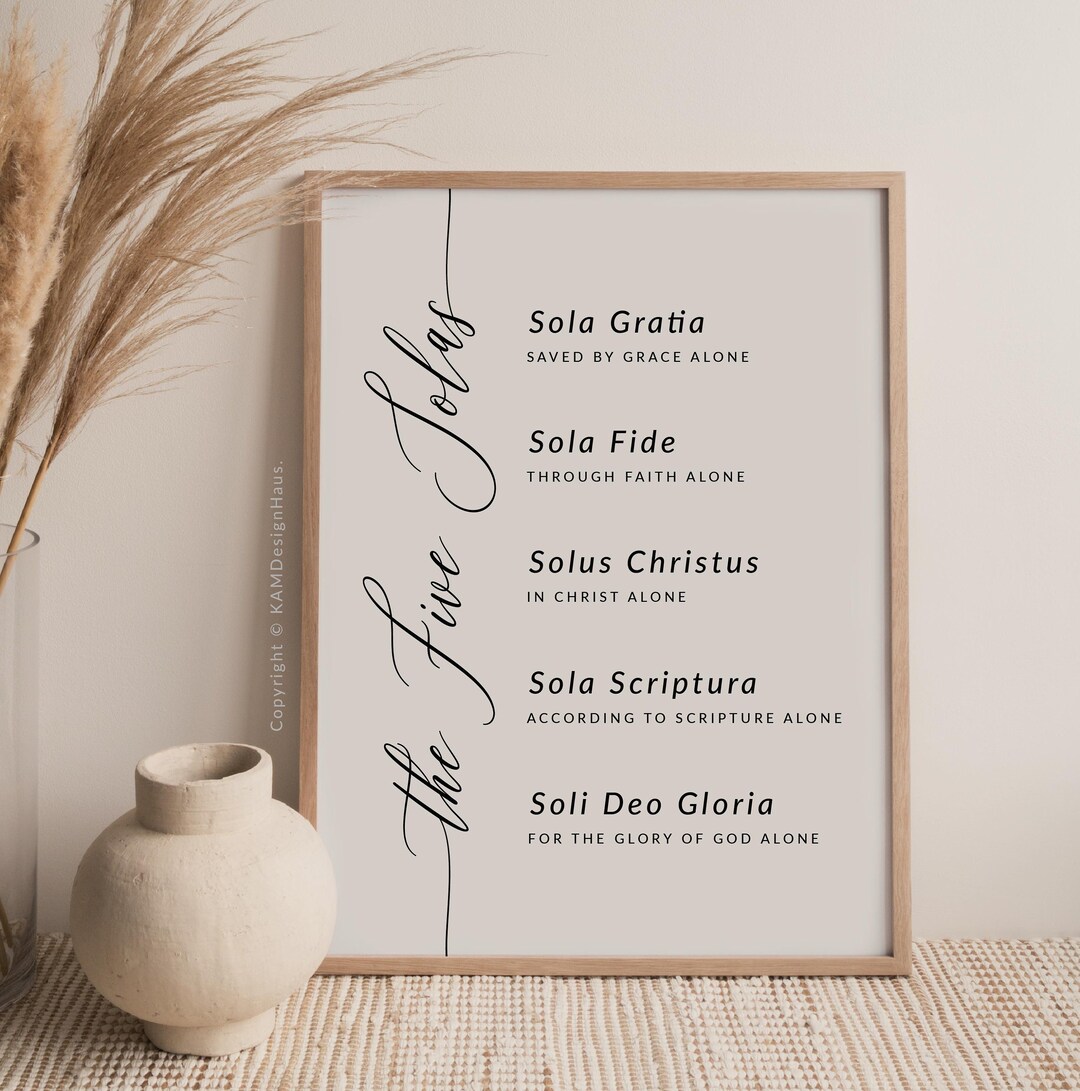
The Five Solas remain important today because they continue to shape Protestant theology and Christian practice. They provide a framework for understanding salvation, the authority of Scripture, and the central role of Jesus Christ. While different Christian traditions may interpret these ideas differently, the Five Solas continue to influence religious thought and inspire believers to live according to their faith.